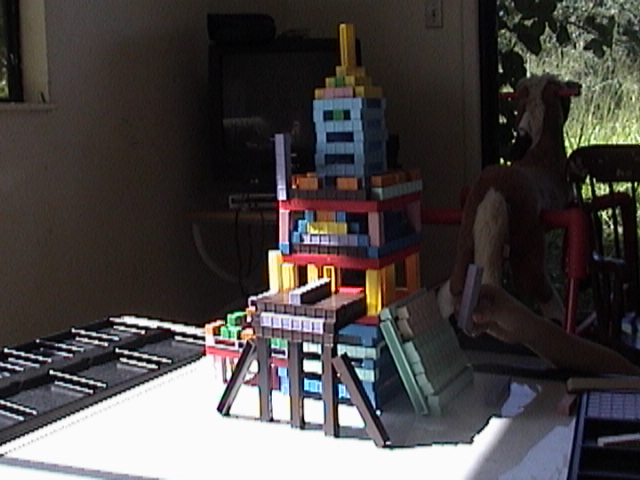
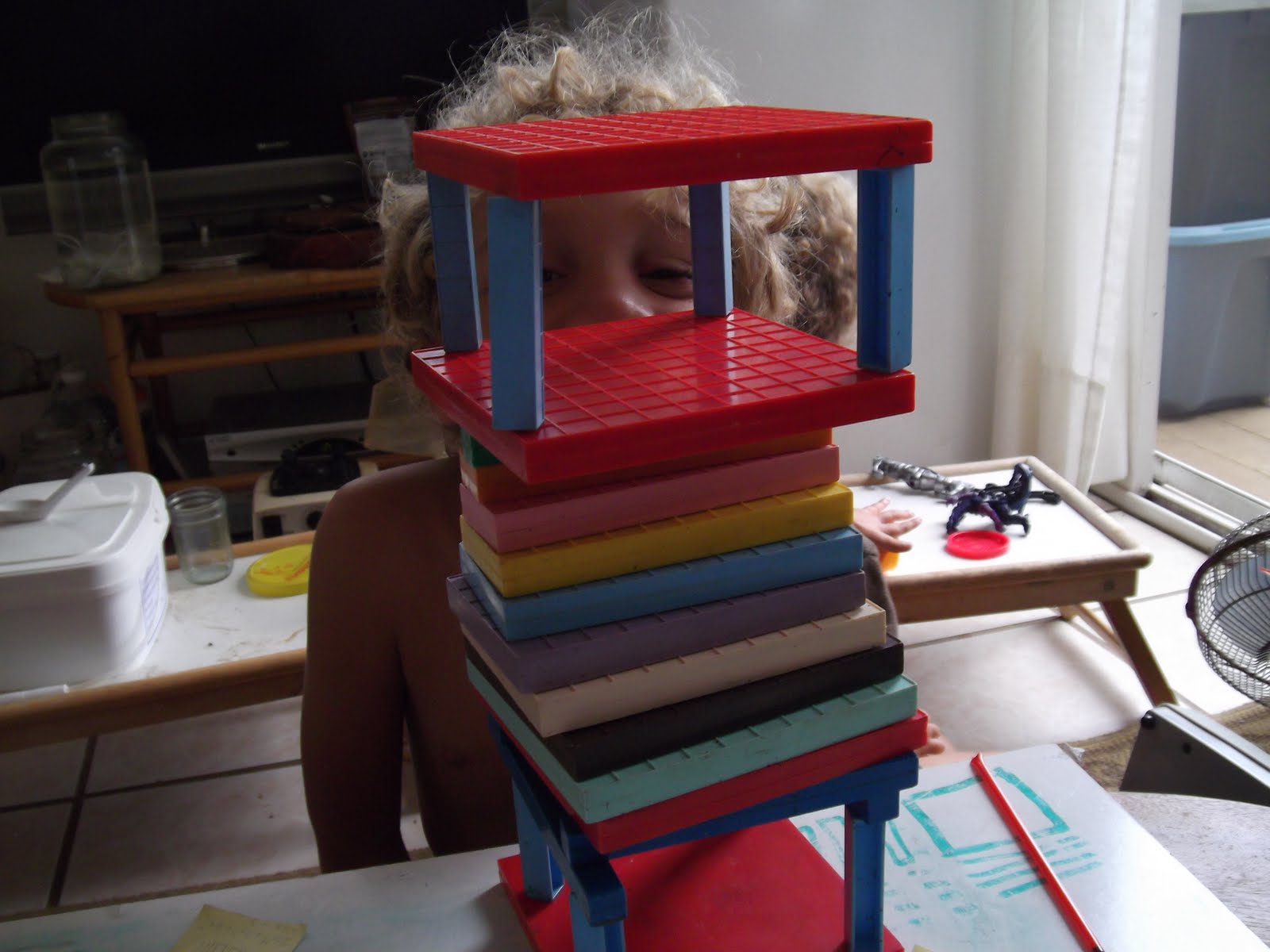
Here you will see students as young as 4 and 5 years old doing algebra and "advanced" math, without ever knowing it's supposed to be hard.
You are invited to learn how to use this method...


Tuesday, March 6, 2012

Cram Course On Quadratics. P1

Here is a set of videos that covers Quadratics, Triangles and Squares with Pythagoras and a little bit more. Caution advised this is not a normal lesson nor is it the way you should present mathematics to younger students or even students this age, but because we have deadlines to meet I stuffed a lot more into the hour than usual. This might be good for some teachers/parents and students to see where we are going with all this...we seem to lose track of the destination sometimes when we get caught up in computation. This post should answer some WHY questions that may have been lurking out there.

Here is one of the graphs we made while we played around with factoring polynomials...the idea behind it all is problem solving, rational and critical thinking NOT memorizing rules. Note we don't even begin to cover application which means I am still being tricked into teaching backwards.


This is the crash course where we cover many concepts all in one hour. When you are teaching little kids you only cover one concept at a time and add more understanding in layers over time. For example you can spend quite a bit of time just playing and building squares. When they are used to factoring, then we can set it equal to zero and find "roots." What do we mean by roots?


So we start off with a simple one as a refresher and to make it non-threatening...and then we can start graphing and get more information.


Note how the symbols bring up some memories of linear functions for him...and you can see the blending of symbols, blocks, pictures and graphing.


We add more information and math terms like "axis of symmetry." Once we understand that we can add the "vertex", and now with those concepts and the concepts of "roots" we can start adding the "y-intercept" and the other points that make up a five point sketch of functions. YOU may want to take a break and make your own sketch...before watching the next one:


We stayed positive in this lesson and this is more than enough info to absorb for one lesson. Note a crash course with me still contains each rung in the ladder...

Then we change gears and play with triangles, radicals and Pythagoras:


And we also played a bit with fractions and covered the 5 concepts and how they related to everything we just did. You can hear him yawning which tells me we are stressing his attention threshold...good time to quit. No need for drugs or labels like ADD. The lesson went for a solid hour and we covered a lot of ground, MUCH more than you normally would. Stay tuned for more lessons.


http://www.facebook.com/Crewton.Ramone


Thursday, March 1, 2012

Playing With Squares Would Have Made Quite A Difference.

Here is a quick set of vids on completing the square. You can find all 5 parts here on the Advanced Algebra page. Basically we take playing with squares to the next level and out of necessity we have to cram a lot of info into a short period of time because he has grades to make and tests to take.

If he had been playing with squares and building square numbers for a while previous to this, everything would come a lot easier and with less stress. Get your students started early...and by "early" I mean as early as possible, five or six year olds can do a lot of this math as seen on my website and other posts on this blog. For them, you go slow and make a game of it...but they learn and discover all kinds of things that will come in handy here.

Take a look at this picture:

In a moment it will make more sense. You can see that instead of a red square and blue bars which are the x we have orange twos...the red square is now a two square and the 9 has twos around it because each x = 2 (and of course x² = 4), and 25 = 25...when x = 2. What would get for x² + 6x + 9 if x = 3?

Watch this vid:


All we are doing is some simple problem solving, trying to figure out what x is. Then we immediately begin adding more meaning and information with graphing...but first we practice without the blocks:


And as you can see he has a bit of difficulty so we go back to the blocks and practice some more. Check out this page on completing the square [link not built yet] for the full story, the page contains a link to both the entire 23:30 minute video and the 5 separate videos on a page very similar to this but with a little more explanation and pictures and video and links...that vid cuts off abruptly and you will need a password to get into the pages that contain the rest of it.
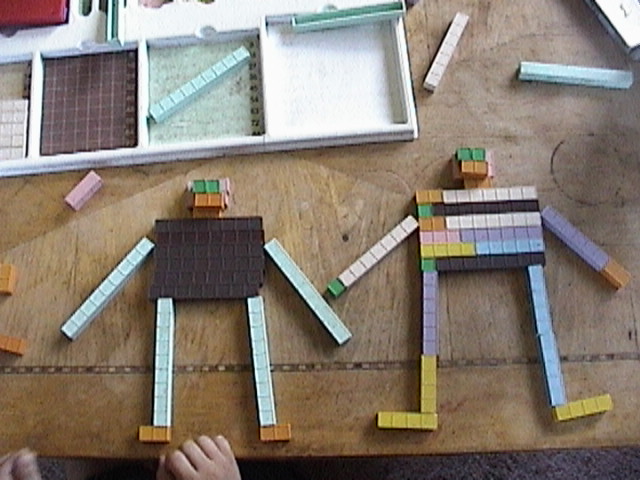
Here is Part 5 where we do one more problem that looked a little daunting but many of my young students have built that very square just playing on their own. Self directed students often get out four or even nine red squares and put x's and units around them...building bigger squares is fun. They can also see the similarities between x² + 6x + 9 and 169 and see the square root is 13 in the case of 169 and (x + 3) in the case of x² + 6x + 9 and certainly if each x is two then x² + 6x + 9 = 25. In fact substituting for 1, 2, 3 and 4 is no big deal and not scary at all for a 6 year old. But the teen-agers who are being exposed to this for the first time do not agree. Too bad they didn't get to play with these blocks when they were kids.


Little kids would just build it draw a picture of it and that would be it. Later we could set it equal to zero or another square number and solve for x. As I mention in the vid, first you introduce the positive root then as they become more familiar with square numbers and integers you can introduce the negative root. 5² = 25 and so does -5².

±5 = 25 is just economy of symbol.

Here is the 5th part, in part 3 and 4 we cover graphing and more completing the square with a negative middle term...which is also ridiculously easy and visually obvious. If you have a set of blocks see if you can figure it out for yourself without using your password to look at the video...

Being familiar with the concepts ahead of time solves a lot of problems. For students who are struggling to pass algebra the blocks make the concepts assessable and easy to SEE and therefore understand and remember.

Find us on FaceBook.


Monomials: Play Find The Ones.


 Monomials can look scary and be confusing for some, but if you make it a fun game they are actually easy and fun. Once the concepts are understood rules can be discovered by the student, not given by you as things to memorize.

Here is a poor screenshot showing a breakdown of the monomial with pictures and symbols so that finding the one is easy.  Little kids enjoy this game and students with various disabilities can really understand what they are doing and more importantly WHY.


Here is a very short vid covering one problem:


Algebra doesn't need to scary or hard. It can be fun. Endeavor to make a game of it whenever possible...make it child's play.

At Crewton Ramone's House Of Math there are tons of games and activities to make math fun.

"You make math fun and easy. I am so glad to have found you! Thank you so much." ~ALH

Find us on FaceBook.


Friday, February 10, 2012

A poem about the Unit Circle by Crewton Ramone.

All we do is count by sixths and fourths and thirds
And your friends will try and tell you that to do this you have to be some kind of math nerd
Personally I find this thinking to be quite absurd

Six, four and three
Adding same kind is pretty EASY
Especially when you can see
1/6 equals 30 degrees
You count the 60's by three's and of course
The 45's are counted by fouths

You don't have to try just count to two pi
And you get there by 1/6ths, 1/4ths and 1/3rds
It's so easy I don't really have words

Can you believe it makes some of your classmates cry
because they can't count by 1/6ths, 1/4ths or 1/3rds to 2pi ?
And somehow they fail to see
That 30 is just 90 divided by 3,
And 180 divided by 3 is 60
So OF COURSE 30 degrees is pi over 6
The misunderstanding was easy to fix
Since 90 is pi over two multiply by a third and your through

An half of 90 is 45, SO
Multiply 2 by 2 and you're good to go
If you try to tell me this stuff is hard
I will beg to differ and call you a tard

And then we can start talking about sin cos and tan
Just chant soh cah toa like you're a cave man
When applied to the unit circle you get x, y, and r
But just memorizing this won't get you too far
If you draw the special triangles you just divide them by 2
Make the hypotenuse 1 it's easy to do

Then stick them in the circle and move them around
All you do is count the sides as by now you've certainly found
And just keep counting; you see the theory is sound
Math is just numbers and all we do with numbers is count
With this simple knowledge the unit circle is easy to surmount

Now we take the whole thing and roll it around the the coordinate plane
And you end up with these beautiful wave forms that make kids insane
The period is two pi, but now up and down we go
Just look at the wave forms and you will know
What happens at pi and one and zero

Understand the concepts and then all they can do
Is change the numbers around on you
And it won't matter because you can see
All it is, is counting by fractions of pi whose denominators are 2, 6, 4 or 3
You count to one twice because pi is 180

Two pi is 360 and your done
And you barely need hero zero
Although you definitely need no fun get back to one
And you use the rectangle to organize thought
Pythagoras' squares get you out of tight spots
Once you understand what it means to be same
It turns out you thinking math was hard
Was really quite lame.

You speak English: that's hard
Math is so much easier in so many regards
Five simple concepts
You master in baby steps
And now you know what I say is true
By the time I'm done with you there won't be a damh thing you can't do.


Wednesday, February 8, 2012

Playing Math. Developing The Whole Brain. Having Fun.

Here is another session with a bright ten year old. She has a favorite game already which is what's under the cup but we did a lot more than that... This post can be found on Emma's page with some full motion vids of previous sessions.

First we built towers with addends for ten, then we built towers of 3's and 5's and 4's and so on and then we laid them down and counted how many...and popped a bit of pop corn, which is when I remembered to get a camera out.


Math is fun with a bit of food...organic air popped pop corn with real butter and real coconut oil and a bit of pink salt and brewers yeast...healthy and good for her brain. Later we slacked our thirst with "vitamin c juice" (emergen-c)...

All we are doing is counting and comparing.

Fours, fives, threes, nines, eights...we compare them to 36 which is 3 tens and a six on top...count how many fours makes 36, note that 9 fours and 4 nines is the same...see that 5's don't make it into 36 evenly...you get 35 and one left over and that's 7 fives. We just talk about numbers count them and eat popcorn. This is math.

She points out a few things. I point out a lot of things, sometimes I point out something erroneous and see if she agrees...like two fours is the same as 9.

"No," she says. "Three 3's are the same as nine not two fours..." We laugh and joke around and count. She can see two 2's are the same as a 4 and "two twos" is fun to say. This is math.

Multiplication, addition, division: it's just counting.


They don't all have to go "the right way" some are sideways some are upside down (we didn't talk about negatives at all), and it made it easier to count the twos especially because you don't lose your place bacause they don't all look the same. We HEARD some very distinct patterns when counting by 5's and discovered some easy rules that she made up when counting by 2's...and she could see 6 is three twos and two threes, and six 6's are indeed the same as 36. We ate popcorn and slurped some vitamin c juice. This is math.


Then we cleaned up a little and made squares. I cannot tell you how important it is to build squares especially after working with teen agers in geometry, trig and pre-calc. So many problems could be avoided if they had some experience with squares. Here we learned about the square root symbol and what it means...make a square and count one side.


That little hook thingy on the side says count the one side. Note the beautiful blend of blocks and symbols to bring the point home...we put all the squares under the square root sign and counted one side...we also spent some time counting the whole square which for a ten year old takes a little work...especially the seven square. But counting the side was super easy peezy chicken squeezy. This is math. Why does it have to be hard?

This along with using both hands uses both sides of the brain. "This" meaning blending blocks and symbols, the blocks very much right brain, that square root symbol decoded by the left brain if there are such things. I prefer whole brain and one side doing a bit more work than the other although we can see now with science and machines the exact areas that "light up" when certain tasks are presented to it. I am very interested in nuero feedback and will be perusing that angle a little more in the coming months because I just don't have enough to do already.

 Sixteen was pretty easy to count, and counting one side was a cinch. We talked about squares and the name of that symbol and what it means several times, it will take many more impressions before she "knows" these concepts and can "see" the square root of 16 without needing the blocks (or even the symbols).

Then we cleaned up and played with fives. here you she she is writing out that 10 fives is the same as 5 tens. Quite obvious. Each of the tens has two fives on it so it was easy to count fives by two and every time we did that was another ten...so 3 dark blue bars is 30 and that's 6 fives...so we are counting by fives and counting fives by twos...pretty sneaking of me.
And there she writes 5 tens or 50...I told her she was right it was 5 but she needed to tell me what kind too...so she popped the zero on there.

Note she uses both hands often times while building blocks. This is important for whole brain learning too...engage all the senses, including smell and taste. The popcorn adds a favorable relationship to math...simple. Pavlov can explain it to you if you don't already get it. Encourage your students to use BOTH hands at the same time if at all possible.

Not shown was a fun game of what's under the cup as a reward for doing a lot of math and being good. The reward for doing math is of course more math...at Crewton Ramone's house of math this only makes sense.

One thing I want you to take note of is counting forward not backward. Lets say we have 13 and there is a 7 showing which means there is 6 under the cup. You train the child to compare the 7 with the ten and see it needs 3 more...plus the 3: means it must be 6 under the cup for some students I may even put two threes...they don't take seven and subtract it from 13...

Count forward not backward. Subtle but important tip

Find us on face book.

I forgot to mention this kid is supposed to be ADHD or ADD or something. We played math and only math for over an hour. 


Sunday, January 29, 2012

Problem Solving Concepts Made Easy


Note that depending on age the emphasis changes...for the older girls it's about the concepts and seeing the rules they have been taught, for the younger students it's about finding same and building addends.

The basic concepts are hero zero and no fun get back to one...but it's all about using those to find same and SEE what x is...the equals sign tells us what x is...and x can be anything depending on the problem.

For all of them it's about making it easy and fun. Let's start with older students:


Now as is typical of many high school math students, they have yet to master multiplication and resort to fingers when adding. I will get them off their fingers and they will have to master multiplication on their own...

Then Watch a six year old doing basically the same thing, CONCEPTS are the same. (BTW it's a piece of organic all natural endangered species chocolate which he picked out from the health food store.)


And the older kids (begin to) SEE the rules:


They are hampered by a mental paradigm that math is hard even when it's this easy...it takes a while for them to realize really math is easy; but when that shift happens the math becomes easy and with or without me A's can be achieved. In the vid we did not evaluate for x = 6 but I did so with them and with Dboyz who figured out that 30 plus 3 is the same as 18 plus 15...and they were quite proud of their skip counting skills...counting by 6's all the way to 30 with the younger boy in the lead. When doing 18 plus 15 they knew five wants to be ten so it takes a five from the 8 leaving 3 tens and three...they also did 8 takes the 2 from the five and again we get 3 tens and 3...lots of DO-able math for kids of all ages. 10 years from now this will be old hat for some students. More to come on the problem solving page at the house of math...the question will come up, how do you do a problem like this?

3x - 2 = 2x + 5...there's no -2 in five. True. You need hero zero again, none of this balancing stuff...you just see same on both sides.

Or

5x + 3 = 2x - 12 again many people can't see same on both sides...that's because of hero zero again. Want a detailed explanation? You need a password. PPPSP = The Password Protected Problem Solving Page.


There are tons of different problems on the PPPS and vid that make them ALL super easy. Remember those boat and current problems? Or how about constant rate problems? AND of course the ones you see here where you might think it's not same on both sides because things got negative...just a few minutes and you will see your way clear...

I have heard from a student that has since moved to the mainland that she is getting A's for the first time in math...all I did was adjust her thinking and hand her some concepts she can use no matter what the topic...beliefs are powerful things. She now believes math is easy...she knows it...so of course she's getting A's. I don't need to be there. And that's the point of all this.


Saturday, January 14, 2012

Why Invert and Multiply.

Used to be to get this info you had to come to a seminar or training, usually held in Idaho...now I think the next one will be in LA or maybe Las Vegas...if we ever do one again. It's on my list but it could be a while. Nothing like in person training but it's costly and you have to travel and all that goes with it and blah, blah, blah.


Now you have the house of math and this blog. First we see fraction multiplication and why nothing is getting smaller we are just counting parts of a part and if you insist yes a third of a half is smaller but we were counting not doing magic and with 1/2 ÷ 1/4 = 2 really nothing got bigger we were counting quarters. Two of them. Observe:


Here is a quick lesson with the symbols no blocks for why invert and multiply. Division of fractions. Also easy to understand. If you want to see the whole lesson go to Sarah's page. There you will see us use manipulatives to make fractions clear and easy. And you will get the joke about "clear"...


If you actually take some time to study the picture above you can see that the symbols are quite confusing to some students particularly to deaf students who couldn't for the life of them figure out the relationship between those numbers if they didn't understand division, or even if they did. How the heck does it turn into 2/9?!?

Well, it doesn't turn into anything: we are counting. The rectangle we see has the one sixth in lowest terms instead of 6/36 which is what you get if you multiply 3/4 x 2/9...which is equal to 1/6...but getting there with symbols only and no concepts is impossible and modern math teaching doesn't even attempt to clear this up they just give you the rule INVERT AND MULTIPLY.

WHY?

And it's right about here many students make the fatal decision that math doesn't make any sense...I mean the rules changed for addition and subtraction, you can just add 1/2 and one 1/3 and get 2/5, it works for multiplication though, and then it's some crazy rule for division and they get bigger when you divide: this math is arbitrary crazy stuff.

No. It's not. It is consistent and beautiful and simple. The five basic concepts are alive in well in our fractions games...knowing what one is, same, rectangles, the how many part the what kind part, and economy of symbol...but the problem with that last part is 95% to include the teachers don't understand what the short cut is doing. It's economy of symbol: fewest symbols possible, and it's a short cut and work saver. Now, if you want to see more with manipulatives to make it clear why we invert and multiply a 15 minute video on this (and a lot more vids) is on Sarah's page you need a password. Just get a month and I think you will see an annual pass is worth it because you won't get through everything I have up in a month and as the months go by I add more and more. I will be offering a special where you can apply your monthly to the annual if enough people get a monthly pass.

One example with symbols only may not have been enough, a couple more examples with manipulatives should clear the whole thing up. The idea being if an autistic student can glean the concepts SO CAN YOU. Same when you see me using 5 and 6 year olds as students for algebra...if they can "get it" so can teen-agers.

Passwords used to cost a buck. Now they cost 5 times as much...inflation and the fact that there's 10 times as much stuff on the password protected pages and then someone sending ma a $24.99 vid that had basically 30 minutes on it, and not even a good 30 minutes just 4 concepts poorly explained with lots of special effects and production. Here you get ZERO special effects and very, very low production value but very heavy on the information and concepts, well explained...or so I am told.  AND HOURS AND HOURS ARE NOW UP. It's worth the 5 bucks.

What we are doing is finding how many times one number is contained in another number. In order to do this we have to make them same or we can avoid all that work with the rule...basically we are just skipping a lot of steps and in the process skipping a lot of students who throw in the towel and change their belief to math is hard and arbitrary. How do teachers teach students who already know they can't learn whatever math it is later on in high school? This will be discussed in depth with another little girl who got a convenient label put on her. She loves playing math but as soon as we bust out the school work, math is no longer fun and she knows it's hard even though we were just doing it with ease a minute before. That's how powerful beliefs and paradigms are. Her page is here. Both of these pages will grow over the coming months, and are especially good for home schoolers and teachers.

Also now lots of Mortensen Math Materials available on my site, if you buy something there, a password if free. The fractions Page was going to go up in it's new form Monday but it's MLK day so I will have Dboyz and I doubt it will get done...although it is on the agenda for Wednesday...fractions from beginning to end.

Find us on Face Book.

People on face book and twitter got the vid FREE for a day...it has since been taken down...joining us there has it's benefits.


Thursday, January 12, 2012

Fraction Subtraction Simplistic Though Autistic

Sarah is getting better at fractions. Her mom wants the focus on algebra because the test coming up will have a lot of algebra on it, but I see students all the time that have trouble with algebra because they don't understand fraction concepts. Rules and process are quickly forgotten. Concepts aren't.


So far we have covered addition and a little subtraction of fractions and she understands that "the name of the game is to make them same." Then we can add, subtract or divide...with multiplication we just multiply and I'm going to try and get her to discover WHY we can just multiply without making them same and why we invert and multiply when we divide. Hint for you it's a short cut to making them same.

For now we spent a little over an hour doing this and by the end of the hour she was getting pretty good.

Here is 15 minutes of that hour.


Note there are fewer pictures and symbols here but we started with the blocks and drew pictures and then I remembered to turn the camera on for a bit. You always start in the concrete then draw THEN go to symbols only, and here at the end I went back to tie it together. You can gauge your students understanding by their facial expressions. Here I could see she was "getting it" but more reinforcement is needed not just because she is autistic but because repetition is the mother of skill for ALL children. If you have young students, you can do these lessons and then months or years later do them again...after many impressions the knowledge is ready for instant recall.

Homeschoolers have the opportunity to cover the same ground like it's new if you start them very young. The idea that they cover it once in 5th or 6th grade and then they'll have it forever is ludicrous to my mind.

The idea that autistic kids can't do this is being disproved right before your very eyes. Due to the brain damage caused more than likely by mercury injections, she will need EXTRA repetitions but that's all. Once she understands it the nuero-pathways can be built and reinforced.

You can now get fractions materials at the house of math. That page has lots more info than just how to by a kit plus some free PDF's and a caution on using fraction worksheets too early in the game. Fractions FUN begins with manipulatives not worksheets.

Also Sarah's page is expanding. More vids are there, some of which you won't find here or anywhere else...but you need a password.

Find me on FACEBOOK or Twitter. Crewton Ramone, there is only one.


Wednesday, January 11, 2012

Moving Toward Mastery


If this is you first exposure to Crewton Ramone's House Of Math, I highly recommend you go to the homepage and watch some introductory videos too, before you watch these because these are a little advanced. People think it's magic or the kids are geniuses (which they are going to be) and that they could never do this with their own kids or learn to teach math this way or whatever poppycock springs to mind when see 6 year olds doing algebra in their heads.

Note for some of the problems we only SPOKE the symbols we didn't even write them down and he still solved the problems! This should put to rest the silly objection that they will have to take the blocks with them to school in order to do math. My boys sit patiently through the simplistic kindergarten math lessons they get at school and then pretty much ace whatever they are given as work or home work...or tests. They have some basic concepts mastered...and are working on mastering more concepts each day, which makes their math at school SUPER EASY.


One of the concepts that was mastered early on is the concept of addends for ten. They both have instant recall for most of their addends but especially for 9 and 10. No pause, seven needs what to be ten? Three! INSTANTLY. This is extremely important and is a building block on the way to mastering addition, subtraction and multiplication and therefore division.

Here we see the older boy who has not yet mastered multiplication working out another set of factors for 24...he knew 6x4 but didn't immediately know 8x3...but he will and this helped him to add that fact to his storehouse of math facts.

They have yet to master their multiplication tables but we are getting there easily and gradually. They both see that knowing how to multiply makes math easy and when it's easy, it's fun. In the vids you see here we stay positive. If you want to see them start learning to do problems like this with their friend hero zero you need a password. I have also created a page just for certain lessons with Dboyz and other students (like Emma and Sarah) that will be instructional to all.


For those that have been following their progress this vid may be a little hard to follow due to the lack of symbols but you understand what's happening, for brand new people often times the take away is that's amazing but what are they doing? What they are doing is seeing pictures in their head.

Here is a short intro, (skip this one and watch the next one if you have a little time the next one IS this one plus six more minutes):


Here is the above vid plus a few more problems, listen to the 5 year old say, "we're so good at math it's easy!" Compare to some students I have that are sure math is HARD.

In which we answer the question do they have to carry their blocks with them to schoool.


Now don't get the idea that I'm some kind of Math Wizard. Naturally, I am better at it than a novice (most of the time) but I have trained teachers all over the country to use this method, and I have trained trainers and have trained trainers to train trainers to train teachers...all of whom are still amazed at the results they get sometimes even after years of doing this. I have had teachers call me excitedly saying "it works!" Or "it never ceases to amaze me." Me either.

Of course it works. You have the right tools for the right job.

Now if you want to see all 26 minutes which is the above plus about another short 15 minute lesson on negative expressions where we use lots of the symbols you are used to go to the Dboyz page or find it on the sample lessons page. Password is changing and prices are going up. Dboyz page has the NEW password...those who want to renew (can you believe it's been a year) at the annual rate will get the old rate if you already have a password. You use the old password to get to the page to renew. Clever, huh? New Password has gone out. Look for it. If you don't get it contact me at gmail.

Price is now $24.00. That's two bucks a month. One month which always works out to more than one month (ask anybody) is now $5.00...3 months for $10.00. Lifetime memberships are now available to those who already got a password.

It's hours and hours of vids and pages and pages of PDF's, and more are added monthly all for $24.00 It will take you months to get through it all or weeks if you are diligent and spend hours each day. But for those who spend a few minutes a day and maybe an hour or two on weekends there is more there than you can shake your finger at. Don't get overwhelmed, just get started...watch the intro and then go to whatever topic you like. You may never see it all because I am always adding and might stay ahead of you at this point. That's okay you are always learning. Even old pro's enjoy watching the vids because they get something out of it each time.


Tuesday, January 10, 2012

Crewton Ramone Playing Math With A 7 Year Old. Intro Lesson.

Here is a good lesson for those with young children. This was a first time student who is being turned off to math at school. We had fun and she wants to come back for more.

What's Under The Cup Quickly Became Her favorite Game


Look for this lesson on the sample lessons page too. You need a password to see the other hours (and hours) of lessons there but here is this one for FREE. Soon Emma will have her own page because she is an excellent case study. She has been labeled ADHD or ADD and is on her way to SPED and I'm sure part of that is due to her not "getting" math and other subjects the way they are teaching it...thus she get bored or frustrated and acts out. This is a 7 year old child. I have seen no indication that she can not learn or stay engaged for 1 hour at a time. But what do I know...?

I am extremely biased against drugs for 7 year olds. I am also dubious when it comes to the ADD and ADHD diagnosis for bright little kids.

Mostly we played games like what's under the cup and making rectangles:

first grade math activities
Building Rectangles and Playing Algebra? No problem.


She never figured out that most kids think algebra is harder than subtraction...which she informed me she doesn't like at all because "it's kinda hard and confusing." We will work on addends and clear all this up over the coming weeks. And you can watch the transformation at http://www.crewtonramoneshouseofmath.com/index.html. We didn't do any subtraction at all that she was aware of...but we will soon master that as well as quite a few other math concepts.

BTW password is going to change soon and prices for passwords are going UP this year.

Anyhow, here is a half hour of math...the hour went by in no time at all.


Find us on FB.

Now available all manner of Mortensen Math Materials.