Here you will see students as young as 4 and 5 years old doing algebra and "advanced" math, without ever knowing it's supposed to be hard. You are invited to learn how to use this method...
If you have a blog or a website I'm happy to link to you, too.
People always ask if they can pin my pics of base ten blocks. YES. Just give a link back to where you got the pic. Kinda like I just did, there. You click on the words "base ten blocks" and it takes you to Crewton Ramone's House of Math. The 'base ten blocks' part is called the "anchor text" and the "link" (where it goes when you click the anchor text) is
http://www.crewtonramoneshouseofmath.com (a href="http://www.crewtonramoneshouseofmath.com")base ten blocks(/a)
Replace the ( ) with < > and you have the code you need to drop a link into your pages. Those with a little web experience know what I'm talking about. If not just send me an email and we'll figure it out. This will also help me rank with search engines for the term "base ten blocks". Right now I am no where near page one and the pages that are, are not as relevant as my site if I do say so myself. lol Think back to how you found me in the first place if it wasn't a super excited friend, it was probably you searching for something to do with homeschool math on the internet. This will help others find me too...again people ask how can I help spread the word. This is a good way but things as simple as hitting like or share or mentions in whatever social media you use helps quite a bit. Reall, every little it helps.
You can pull stuff off my website or this blog too if you have a blog or website that needs content, again just give a link back to where you got whatever it was from...to include text. EZ.
JUST PLAY BLOCKS
People also always ask me, what do you mean "just play with base ten blocks?" Just what I said. This isn't rocket surgery: just play blocks when they are little kids (roughly 8 and under but even teenagers can have fun and learn math just playing with blocks but then it moves to a reward and free time, with the little kids especially 5 and under it's pretty much ALL free time and sing songs ). And DON'T over do it by asking ALL of the questions listed 'at once' or in the same session...they should be "natural" questions. You may also take note of the child or student as they are building; they may say something like, "I need 4 fives...two for each of the smaller ships." For little kids that's 4 divided by 2...and BTW how much is four fives? 5x4.
You could sing songs...whisper count, just skip count...whatever. Keep it simple and fun.
Base ten blocks make math fun.
How many twos on the big ship? Five. Let's count them, 2,4,6,8,10.
Hey how many three's is that on the super duper laser cannon turret? . And what shape is that? Square.
A fast lesson square root should be obvious and natural.
What's 40 plus 40? 80. If you had to use fours how many would you need? 20. Way easier to just grab two 40's huh...?
If you make a cube out of 3's how many units would be in it? 27. Hey look instead of writing 3x3x3 we could write 3³--that's called economy of symbol.
What's 60 plus 60? 120. Wanna get crazy and count 120 by sixes? NO. lol Do it anyway. Lets see if we can find a pattern to make it easier.
You can also see a calc lesson had gone on before this where we learned about doughnut factories and water tanks.
A lesson on square roots of numbers like 2 and 3 can be seen at the nose of the big ship where we wrote out quite a few places. It's all math.
Here was a fun response to build me something. This is the hull of a pirate ship...with cannons and everything.
Kirk's Tutoring Get's it. You might give his FB page a like.
This came from Kirk's Tutoring, who also uses this method. I assume the student was given free time but gee, seems a lot of questions could be asked about his too...also note the symmetry and the observations that could be made here, and they could even just start with what the word "symmetry" means. Which is a very complex concept for the 6 and under crowd but there it is shown clearly.
The work here was building a cube of hundreds made out of addends for 10. Then the kid "splendified" it by adding some hundred squares and the pyramid of multi tens on top.
This is a freighter with huge engines so it can get cargo from planet to planet FAST.
Here is a building with a monorail going by it. I thought it was a house with a fence but the little girl who built it set me straight. and she asked for some help flushing up the blocks, Note the addends for 4 and 9, and of course we counted by sevens, just so she could hear the pattern. 7, 14, 21, 28, 35, 42, 49...how many seven is 35? Did you hear THIRTY-TWO...? They should say something like no, but I heard FORTY-Two. Did you hear 15 or 18? No but I did hear 14...etc.
He called Mortensen More Than Math for a reason. Imagination, fine motor skills AND math are developed by playing with these blocks. This page was to give you ideas...NOT BLUEPRINTS.
These need to be turned into little booklets with instructions on how to build them (kinda like those booklets you get with Lego kits) and some observations that can be made while doing so...
The problem I have with doing books like this is that some of you (not all of you) will ONLY build the ones you see in the books ONLY ask the questions I list etc. You have to play and be creative; these are just examples , a vague framework from which you can get ideas and then allow your kids to be creative...and build whatever they want. As they build talk about what they did. Use some symbols to show we can use numbers to "talk" about what they did (express reality numerically). And using mathematical symbols is a WHOLE lot faster than English or whatever language other than mathematics you speak.
Get a FREE book to help you get started exploring and discovering the wondrous world of mathematics as presented via base ten blocks. Just click this link to get Supremely Simple Subtraction delivered directly into your inbox.
Playing math often means learning math without really knowing you are learning math....when you are four or five. In this case we learned a lot of math, addends specifically, without worksheets without pencil, pens or paper. We just built a house for a duck and as an added bonus got a few more repetitions for these addends added to the long term memory. It takes many repetitions starting at an early age to get math facts (or any facts) into "the long term memory" and available for instant recall, but as you will see it's easier when they are younger and here is WHY.
Where most of you err particularly with multiplication is you try to cram the number of repetitions into a short time frame usually well after the brain is out of the "download mode". This can be effective but it has been my experience that this can also cause a host of problems particularly when it comes to math anxiety and attitude toward math in general. Instead of a fun and exciting language that underlies ALL of science and explains the universe around them via the physics and chemistry and biology it becomes drudgery and something that requires a lot of mental effort to memorize a host of math facts that don't seem to go together.
Using base Ten Blocks to Make A House For A Duck, You can also see a math bag in the background because we played what's under the cup too. We had fun while learning basic addends less than 10.
What you want to do is make positive associations with mathematics and avoid having to pound math facts into your children. This is what happens when you wait until they are past the age of 7 or 8 to teach them math. The very basics, 45 addends and 400 multiplication facts are learned easily before the age of 7; it is much harder after this age because the brain state has changed.
If you want to be an effective teacher you need to understand a little about how the brain works and how to put information in it. I will have more on this later but the basic is this:
When the child is naturally in "theta", they are basically in download mode. Learning anything is easier for ANYone while in theta, there is an entire industry dedicated to selling audio technology that puts the brain into these states for "super learning"...being happy and unstressed adds to this ability to learn easily. I cover this in Parent/Teacher training.
Removing "the NO" from the lesson is important because "NO" is a charged word that has all manner of negative associations attached to it even by the age of 5. Just hearing "no" is enough to make some children mad or sad or angry which activates the reptilian brain (cerebellum) which shuts down the prefrontal cortex which activates the fight or flight response where blood is pushed into the limbs NOT into the part of the brain that facilitates learning or higher order thinking.
By age six or seven "downloading" is no longer the default setting as it were and they begin spending more time in alpha and then by age 12 beta (and with training Gamma, a state not shown here and a state associated with "miracles" and the "paranormal" and other psychic abilities not easily explainable by modern science but which can be achieved with "practice."). Logically the best time to teach a large amount of factual information is in the early years when it is easy down loaded or assimilated. The names of states and their capitols, Presidents, the ABC's and of course math facts like 7x8 and 17 squared are easily learned and stored in the subconscious for easy recall at earlier ages. And if you make a game of it and make it fun, the learning is easier still. Play math. Not worksheets.
At Crewton Ramone's House of Math as with Mortensen and Montessori, we emphasize whole brain activities...using both hands for example is VERY important, but can you also see that involving the other sensory cortexes would make learning easier? This is because we use more of the brain. This has been borne out by research at major universities.
This seems obvious to those of us that use manipulatives to teach math but quite a few others are only just now discovering that the more senses you involve the easier learning is.
WHEN you teach is also an important factor...as the child gets older more repetition is required to put information into the sub-conscious mind to be made available for instant recall. In other words the older the child is the harder it will be to memorize multiplication tables...learn a new language or most any subject. This does not; however, mean it can't be done. Obviously, it just means it will be harder, take longer, and often involves a lot of tears and frustration.
Any student properly motivated and who is relaxed and happy can learn math at any age. I have proven this repeatedly for over 25 years with students of all ages including adults. But it is FAR easier if you get them young because by the time they are teens many factors are working against you, brainstate being primary among them but as you know, attitude and motivation may be lacking by the time they reach their teen age years, plus there is the added conditioning of past failures and the thought that math is hard instead of something easy and fun.
Here is theory in action. He sees the math facts. He hears the math facts. He experiences the math facts. He has fun. I should have put the camera on him when he told his parents he was done because you could see the satisfaction and pride in the smile on his face. Such a simple thing building a house for a duck, but terribly important for you to understand that through play we learn math, sans tears or fears and without "robbing them of their childhood", but instead making life far easier for him and others like him down the road.
Once (while) addends are mastered, multiplication which is just repetitive addition also becomes easy and we lessen the chance of losing them to multiplication tables and the stupidity that is the way we currently try to force feed students math at a late age.
Come join me on facebook. Share and like this post.
It's pretty easy once you understand some basic concepts. This short 5 minute video details what you get for your money. If you have already gotten a lifetime password this page is Gratis. Otherwise it's just $39.95.
The page contains several hours of video that will make trig into child's play. It also has several bonuses that make the page (more than) worth the 40 bucks you are going to pay...
You can pay 40 bucks and it will be more than worth it. Or you can get a "lifetime pass" and get passwords that get you into ALL my password protected pages AND the Parent Teacher training page. Use the button below. If you can't afford $250.00 all at once use the ten pay feature, And remember this page is FREE to those that already have lifetime passwords, but not to those that just have the P/T Training or Sitewide, or who just have annual password status.
Update: These prices have changed.
Here is the one pay (choose $250.00):
Here is the 10 pay (choose $26.00):
Obviously, the only one that will get you the password to this page is the $26.00 Lifetime password. So when I say lifetime password I really mean 3 passwords. One for PT Training. One for ALL the other pages (Sitewide) and now one for How to teach Trig to 8 Year Olds. There will be more Al La Cart pages in the future but if you have a lifetime pass these come free with it...and as you can see eventually the price of the Lifetime pass is going to go UP.
If just want the password to this page buy it on the Entry Page and you are quite literally set for life. That 39.95 gets you into that page forever not just a week or month or year. When the password changes, and it will, just email me for the new one.
Or direct to the page requiring your password here.
You get quite a bit of stuff for free, for example go to this page and get a some FREE simple trig lessons. You might also do a search for Crewton Ramone Trigonometry and see what comes back. And of course, if you don't think it was worth the money for the password ask for your money back.
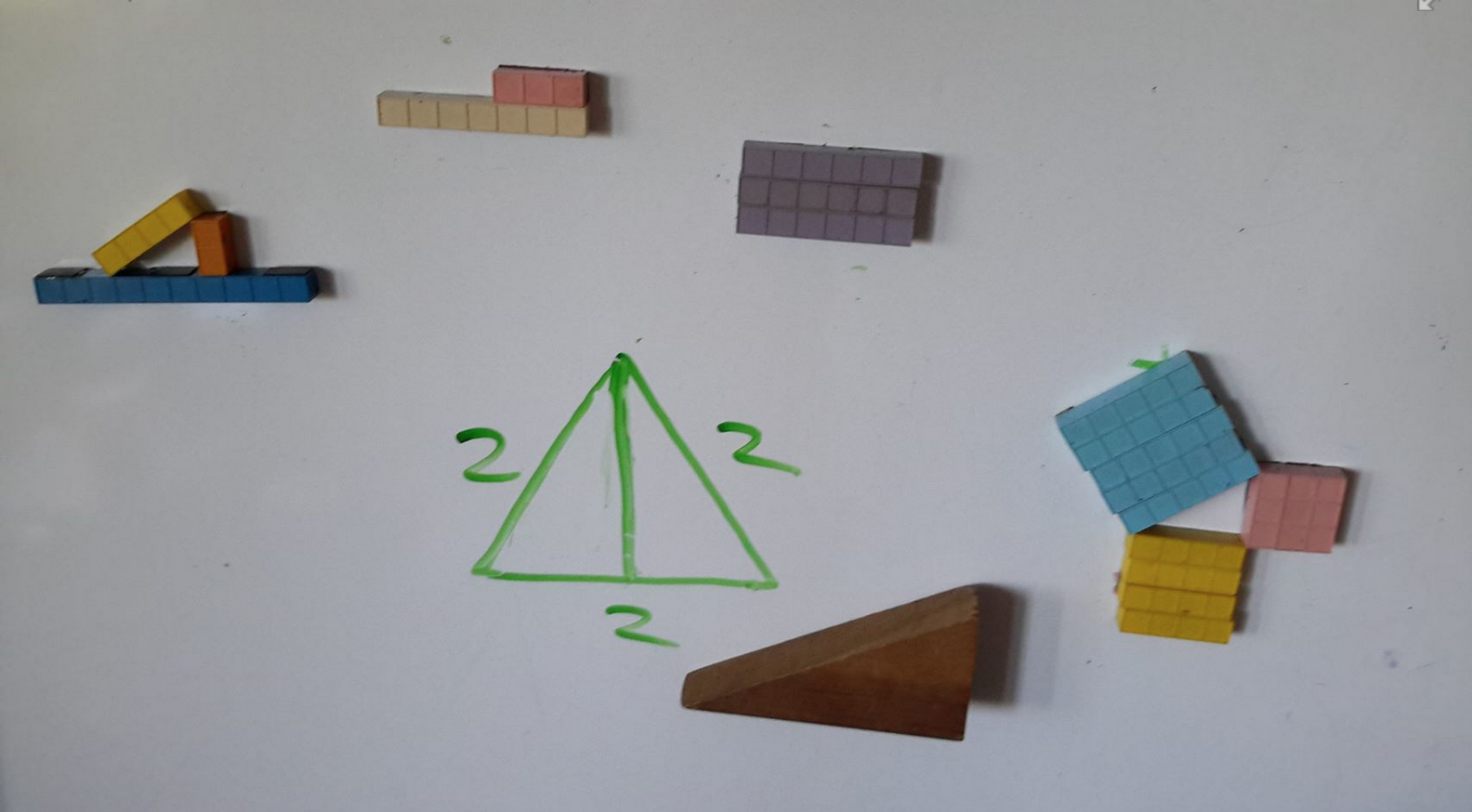
Here is a photo set from the training...basically shots of the white board before I erased it and moved on. For an explanation of what you see here go to the page and watch the 40 minute screen cast...
Use these simple tools to make trig child's play.
Don't forget to check out the FREE lesson on this page:
***Also be looking forward to a sale of sorts where you get a combo kit, a pass for two trainings AND, plus a lifetime password all for just 345.00. And because I will have the combo kits in hand you will get same day or one day PRIORITY shipping, so you will have the kit IN HAND in a week not 6 to 8 weeks. Stay tuned for that.
Another FREE Mirco LESSON:
You will see the reason for some of the vids on the password protected page once you see these little kids learning Trig...make math easy and do short lessons. Even this 15 minute lesson could be broken up. But I'm making videos to show you guys...note how I ask questions I don't just tell them facts to memorize. All this and more is covered in "How to teach trig to eight year olds." Note how I EXPECT hem to know and use basic concepts like square toot, divide a number by itself to get one, opposite addends, same and more...put it altogether with my help.
Trig too much for you? Start with a FREE book on subtraction. Get Supremely Simple Subtraction here. If they can't do subtraction easily math isn't going to be any fun. Check the comments out on that page...people really like my free stuff I think you will find you'll get more than your money's worth when I ask you to pay for something. Get your FREE copy today. Also go back up and hit like if you got some value out of this page whether to get "How To Teach Trig To Eight Year Olds" or not.
Playing what's under the cup is a hugely powerful game. In the beginning it teaches simple addition...but as we progress it teaches much more. It is an extremely powerful game although it it deceptively simple. Great for pattern identification and basic algebra concepts that will be important throughout their math careers. The basic concepts are not beyond the grasp of any child so long as you introduce them at the child's level.
Here is a short vid showing the introduction of Hero Zero.
We could have gone either way...to NFGBT1 or to Hero Zero. I usually go to Hero Zero first.
Here is a longer video which is just one of many you will find behind the SAMPLE LESSONS password protected page. You get to watch it here for FREE. If you want to watch a lot more videos like this just get a password. The Trig page alone make the password worth it, and six bucks a month is a no brainer. Be reminded you are watching most of a lesson for which the people in paid $50.00.
This video shows sample lesson with a 6 year old girl doing problem solving it is also on the sample lessons page; problem solving like x + 5 = 13 is EASY.
But also x - 7 = 6 which takes a little more thinking.
And story problems like 20% of my little ponies are blue, I have 70 my little ponies how many are blue?
Introduces 21 is x% of 70 and more...for more on Percentages click on the percentages tab (%) at the house of math or click the link (t)here.
In the picture she shows us a problem she made and we got it right that a 5 was in the cup...my son earned 1 buck. I made 49.00. If you would like me to pimp my son out to you so your kid can play math and stay engaged email me...she usually will play for 20 minutes before she starts asking if we can quit. With my son I had to cut the lesson off after an hour...46 minutes of it is on video unedited..so there are long pauses as they figure out the answers...perfect for your kids to play along in real time...
This video is pretty self explanatory, so I won't put too much here in the way of words. People don't read these posts much anyway just look at the pictures and watch the videos...so:
But for those interested in a little more in the way of training for parents or teaches, with little kids you don't need to write symbols to start. (By little kids I mean 6 and under.) Just do what you see here and talk about it. Later the symbols will make sense when we write them. Don't forget to spend some time DRAWING them too. (Look at the second excerpt for more on this on the training entry page.) Lastly, do symbols...but this kid is 17 so we went directly from manipulatives to symbols...because he's paying by the hour and it takes too long to draw and label them although it is a very worthwhile step, I told him to do it at home. I had other things I wanted to do in the hour. The idea is to teach concepts but this child needs work on multiplication...multiplication will make all of his math easier to understand because there is no time lost on computation (if multiplication is easy and fast, if not the math problem is compounded because they have to think about multiplication AND whatever the problem is too...once they have the multiplication down as Forest would say, "that's one less thing."
Here again I want to drive home the point that all we are doing is counting and basically I am teaching him to count and count quickly using fractions manipulatives. Counting quickly like this is called multiplication. The fractions are also discovered...and equivalent fractions understood and reducing fractions will not be difficult when we introduce that concept later...only then we will be using division instead of multiplication. I hope you can see the rectangles...
Introduce skip counting early and sing songs and play and this whole problem can be avoided...too many teen-agers have this exact same problem, they are having trouble with math (particularly algebra) because they can't even multiply and having a calculator doesn't help. In order to see relationships, ratios and multiples it is imperative that they know their multiplication tables bare ass minimum out to 9x9, out to 12x12 better than that and out to 20x20 (yes, 400 facts) best of all. We went thru a little period there where well meaning but horribly misguided math teachers tried to say that with the advent of cheap calculators students didn't need to know multiplication by rote memory. OPPS.
They were trying to spare students the pain of memorization and drill. I agree about taking the pain out of mathematics but not with taking the learning of multiplication out of the mathematics, which is why we didn't spend the whole hour on this...I assure you drill, worksheets, and flash cards will turn the kids off faster than you can say "modern mathematics teaching in America is an utter failure." But if you play games, sing songs, skip count, and do fun math activities starting at an EARLY AGE, multiplication can be mastered without tears, muss or fuss.
I have a book (my Curious Counter's Compendium) you can get for practically NO MONEY that will help you start teaching math to your toddlers, and another one (my Subtraction Manual) you can get for NO MONEY at all. More manuals are being worked on as we speak, there will one day be 11 in all. Side note: We measured the distance he walks using the odometer on my car and it was just over two and a half miles, one way. Math is either important or it isn't.
More side note:AFTER you go thru a lot of posts on this blog, videos on youtube and of course my website you might want to get a password...
Nice, now change the game and make it so he can only use one three...then the other ones have to be a two and a one or three ones, you might mention right now they are all three plus zero and it's more fun to make combinations...same with the four, only use one four and the others have to be addends for four and so on also nothing says you only have to use 4 on the corners, you can use 5 or 6 or 7 or more pillars...then you can play "jenga" an see if you can take pillars out without knocking the whole thing down...then when does fall down just build it again and see who can take the most pillars out before it falls...Also, make a video of it and maybe you could win something.
Many math concepts can be learned with just this one simple exercise. You can slide a 2 into the level that he built with three's and the concept that 2 is "smaller than" three is easily seen...in math we could say less than...and we could show the symbols on a white board if we wanted to but at this age playing blocks and verbal reinforcement is enough. You are creating a math rich environment, where several of the senses are used to learn math and basic math concepts like more and less and addition and of course subtraction.
The mind absorbs all this then later (days, weeks, months or even years) this experience can be drawn upon to make sense of these symbols: 2 < 3...
You could put on the skip count CD or multiplication rock vids on youtube in the background and sing along as you skip count the threes he has used. PLAY, make teaching addition fun; little kids love to sing and they don't much care if you can carry a tune or not as long as you are making a joyful noise.
Anyhow make a vid of your kids playing math and you might win some cool stuff. UPDATE: this part is over but you should still check out primal math for some cool apps...Zombie Fish Bits is fun....
If you'd like a FREE manual on showing how to teach even very young children a super easy way to subtract click this link to my Supremely Simple Subtraction manual. A new Games and Activities Manual is in the works but it will be a while so meantime use the old one. (Takes a while to load so give it a minute...)
My response:
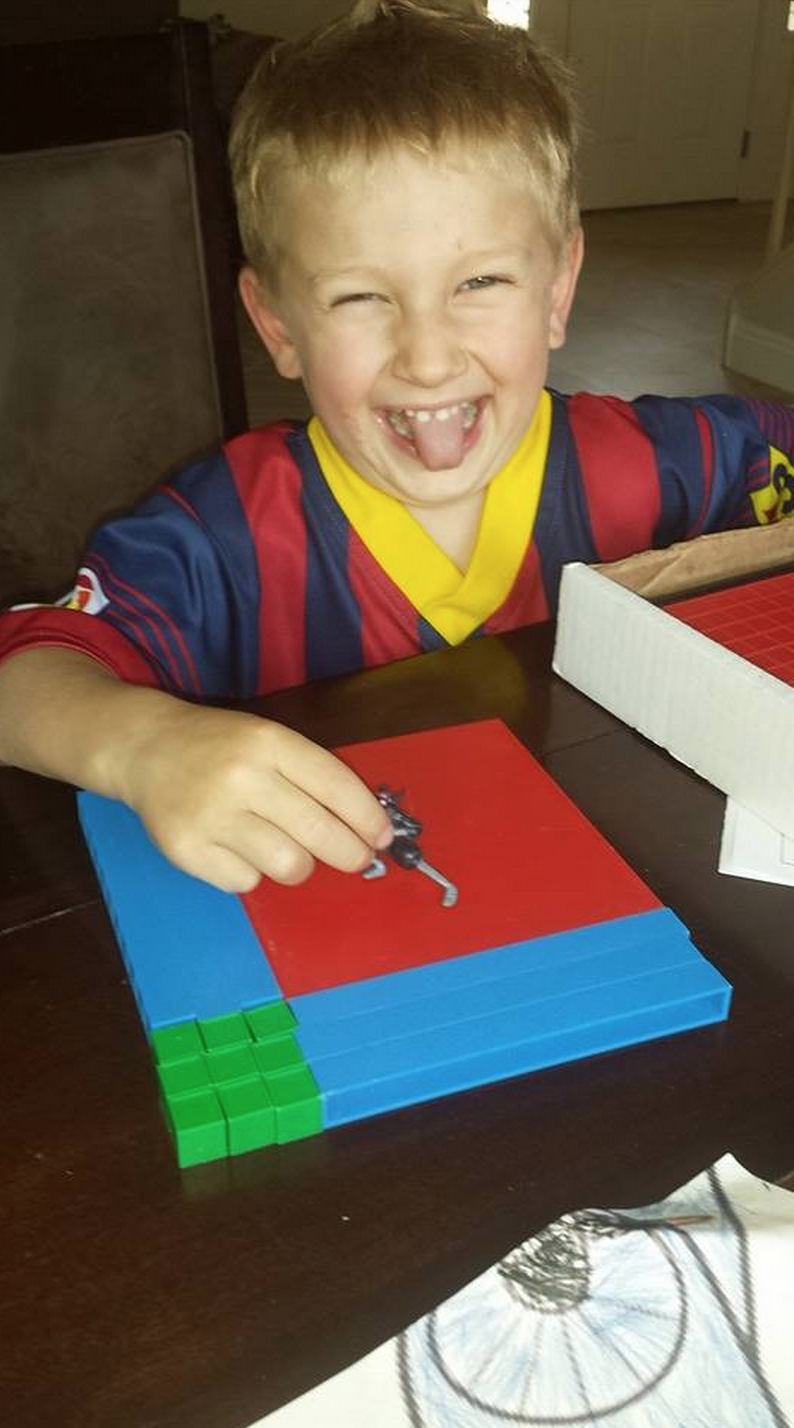
Excellent...! Now you can talk to him about the 9 in the corner...you could flip the blocks over and count 1 hundred, 6 tens and 9 units...you could talk about square roots and square numbers playfully with the 9 and the 169...and of course the polynomial...x² + 6x + 9...the square root is one side which is x + 3....and of course (x+3)² = (x+3)(x+3) = x² + 6x + 9 and you talk about economy of symbol...that we don't need to write it twice...you could talk about 13² = (13)(13) = 169...you could have him draw a simple picture of it...and talk about these things while he's making his drawing...note I say could you don't have to...you could write some symbols and show him how those symbols describe his creation the same way words can describe a brown cow...and you do it casually, not drilling him not formal instruction just, "hey...look at these green ones there--they make a square and we can count the sides or one side...hey look at that! You made all those blocks into a square can you count the sides? What's the blue one called?"
If you are on the base ten side he should say, "10...and three units." Or something like that. And you could say, "what's the name for one ten and 3 units...?"
If they are on the smooth side and you are in base x, the blue one's name is x and three units...
A ton of math concepts can be taught off of this one rectangle...you don't need to cover all of them at once...just a few at a time. Check this post out, it talks about all the things you can use this simple rectangle (square) for, when it comes to teaching math concepts.
Now build one that's 14 or x+4 squared...and then 15...or maybe he wants to make a different shape with his 6x...and make it (x+2)(x+3) or some other combination for 6, 5+1, 4+2, 3+3...still 6x but now a different number fits in the corner...just play math, bigger is funner.
Here are a few recent vids. The point of them and this post is to illustrate and bring home basic concept number three: we form rectangles to facilitate counting. Rectangles make it easy to count and we can reduce many seemingly complex math problems to basic counting with the help of our friend the rectangle. In the first vid they make percentages EASY by using a rectangle.
What basic concepts do you see in these three vids?
Rudimentary Editing Skills Level 101: ACHIEVED. Mastery w/ percentages is being attained. THEN we can move on to ones that end in 5. Baby steps. Note the block serves as a "post" or memory anchor on what to do. They understand the CONCEPT so now I'm just changing the numbers...and we also get practice with multiplication and division.
Here is their little sister playing and learning addends...she had asked very nicely if I would play what's under the cup with her since her brothers were playing outside with two neighbor boys...and she wasn't being included. So I brought DBoyz in and shot that short vid and then sent them back out and played with her...we played what's under the cup and built tens and then she made a house for little ponies to stay in and then we cleaned up and it was time to go. She made the comment, "Time always goes so fast when I come to your house." Because time flies when your having math.
This next video is also edited. The full version is on Dboyz page at the house of math. All three of these videos can be used for educational and training purposes...lets use them to focus on basic concepts.
You can stop here. The rest of this post is long and aimed at those who are interested in learning more from the perspective of a trainer or an aspiring master trainer. A link to this post will appear on the teacher training page too. Here is the whole converstion on Crewton Ramone's FaceBook page.
I highly recommend you click that link and read the thread, what follows are some (slightly edited) excerpts lifted from that thread starting with this: First things first, I don't write or make videos for Unicorns. Celeste is a unicorn. Female engineer. Statistically speaking they don't even exist. There are few Unicorns who have become interested in the house of math...Staci was another one: black female electrical engineer...Irene is another one I'm confident she knows more math and certainly more chemistry than I do...these are the exception not the rule...and it must turn tables and become the rule not the exception. I have been paid large sums by men who fully understood the mathematics well enough to apply it to physics or engineering or economics but could not explain why you invert and multiply to a seven year old's satisfaction...much less why the x's don't change when you add them...what has to happen is people who actually understand math have to be given the tools to be able to explain it to others.
Most parents statistically speaking failed algebra. Many teachers got a teaching degree because it "didn't involve taking a lot of math..." Teachers currently still think there's a trick to it:
Question: if you understand math and math concepts will you still need special techniques? Answer: once you understand the concepts all they can do is change the numbers.
I'm starting to break lessons into small pieces for a couple of reasons, First: because we know the attention span of the average viewer is extremely limited...two minutes is optimal video length...what a laff: people want to learn math in two minutes....if not screw it...girls can become strippers and guys can always cut grass--wealthy people rarely do their own yard work. Second: because too many parents and teachers can't wrap their head around switching from topic to topic because they can't see how the lessons relate...we are learning about Pascal and summation but all we are doing basically speaking is addends and multiplication....the percentages practice was practice on multiplication and division. Once we get the CONCEPT down all we can do is change the numbers and then it just becomes practice with doing whichever of the basic operations are required because AGAIN computation is how we DO math but it's not THE mathematics.
You can do all the math with just addition and subtraction but it takes longer...further if you cannot DO computations quickly and easily mathematics is HARD because you have to contend with two things layered on top of each other: trying to remember the rules and process for the problem at hand and trying to remember the rules and process for the computation required itself. This overloads the system and results in failure, anxiety and incorrect answers which leads to negative feed back, which leads to more fear and anxiety, which leads to an aversion for the mathematics which leads to more of the preceding and a feed back loop is created that includes actual pain, mental anguish and damaged self esteem which leads to hating math, which leads to the dark side.
The concepts are very basic here. We form rectangles to facilitate counting. There are more as an exercise for those who are thinking about tutoring or maybe one day training others...what other basic concepts are covered in these three short videos?...you might also go over them in your mind even if you are "just a mom" teaching your own kids. You can put comments below if you like...but there are several more at work here. I mention some of them in that FB thread.
Now, the reason that this method is so effective is because if all math is counting and we can reduce any problem to simple COUNTING, then anybody can do math that can count. The trick, if there is one, is knowing how to reduce a problem to simple counting, which as it turns out is the genius of it all and which is why we say if you can count to nine form a rectangle and tell if something is the same or different or not we can teach you math...I add that they must already be able to speak a language generally it's English and if you can speak that language math should be EASY. Anyhow what basic concepts do you see in these vids?
Mathematics is the study of relationships and we describe these relationships with symbols. pie is not just 3.14....it is the relationship between the circumference and the diameter, it's not just sin30° = .5, sin is the relationship between the side opposite 30° and the hypotenuse...addition and subtraction are inverse functions but basically the same thing in order to do one you need to do the other basically you are combining, the same with multiplication and division, things look scattered and random (even though the tab bar on my website basically goes in the order you will see it presented in the public schools) because you don't get how the language goes together or the gestalt of it...you can't study one part without studying some other part...using this method. You can certainly compartmentalize the mathematics and they do for an example think back to or visit your nearest public education institution.
"Just show me how to do the problems" is the problem. My son is currently suffering under this line of thinking where he gets to do timed worksheets for multiplication facts. He doesn't do as well as other kids on these because he doesn't write quickly, therefore he must not be very good at math. They are majoring in minors.
When asked to be able to use and apply this knowledge to something like 28 is what percent of 70 or how many 4's in 72 they either can't do it at all or take forever and certainly can't do it in their heads...but they can whip out a 50 problem worksheet of single digit multiplication facts in under 3 minutes...but then ask them to figure out how much change they get if they buy 7 pounds of rice at 2.78 per pound and pay with a $20...no pencil, no paper...and they can't do it, because they can't organize and keep track of their thoughts.
Concept #3: Rectangles facilitate counting.
A = LW This gets totally LOST if you just memorize (n² + n)/2 which is what most of my students have done if they even know about this at all....they use summations on SATs and other standardized test to "separate the men from the boys..."
In the example for 14 we see various addends. a couple for 14 and also for 4, we also see the number 105 is 70 + 35 again numbers are made up of other numbers and that part will come in handy when doing division but also trainers should see the distributive theory of multiplication as we distribute the 7 across the 10 + 5 so the 70 = (7)(10) and the 35 = (7)(5)...students some how are mystified by this when they get to algebra even though they have been doing it all along, where the most common grade is "F" and when asked to multiply 7(x + 5) often have a very hard time even though it's easier than doing it in base ten because all we get is 7x + 35...whereas in base ten we have to combine like terms (the tens) which is a basic Concept #2: we only count things that are the same. If you were going to be a trainer and were asked to delineate the concepts on these vids and you came back with counting, forming rectangles and "The blocks help you see the patterns." I would FAIL you...because you failed to see the the basic concepts...
If you were being tested under Jerry or another Master Trainer named Brian you would fail and more than likely receive a serious dressing down to go along with it...I remember one woman in particular in tears after she got done being schooled...although Brian would try to be a little nicer about it. I'm going to (try and) develop some Master Trainers...if I get 7 in the next 9 years I will have done phenomenally. When you are done you should be able to take any textbook and then take just about any problem and either show how to do it with the blocks or step back and show the basic concepts needed to do the problem because by now it should be clear that you don't want to model every problem with the blocks nor should you need to...and you don't need to hit the student over the head with them or take away the aha moments by just telling them....let them explore and discover for themselves. You nudge them in the right direction or point them down the path that will lead to the discovery you want them to make....but they walk down there alone. You are not far off, just in case and to catch them if the fall---control of error is important but failing your way to success is also important...not wrong just getting more information...that attitude leads to discovery and opens up the wonder. Control of error does not mean don't let them make mistakes ever or avoid making mistakes: it means learn from the mistakes, take that information and then use it to get it right.
Fear of failure or frustration of getting it wrong or worse being put in a position where they can not succeed shuts down learning decreases wonder and joy to zero or less--usually less, and makes the math what it is today. I see math memes like this:
And like this:
If you understood what you were doing how could you NOT know? Yet this is a completely common response from many of my students who are not used to getting A's. Try it some time ask your child or students how they did on their math test...
I would encourage to click this link and read the thread. The point is not to "talk down" or to deride other people who don't quite get it...entire companies have been built that purport to use base ten blocks to help you see the math...but some methodologies with base ten blocks are better than others. I can swing a hammer and work a saw...and my trig is strong, but I know quite a few carpenters who using the exact same tools, would get whatever it was built faster, better and prettier than I would. My aim is to make you, if you so choose into a person who can teach math using base ten blocks and other math manipulatives, faster better and prettier than the majority of your peers. Unfortunately, I can't do it in an hour or even in 50 five minute videos...but I do have some parent teacher training more than 7 hours worth at VERY reasonable rates which many have found to be very, very useful.
If you would like to enter into a dialogue regarding concept number three, or make a comment about the teacher training (many have taken it now) please do so in one or the other of the comment boxes or ask questions about concept number three not 4 not 5 but 3 that would be concept number three the one about rectangles and how they facilitate counting.
I do not recommend my Tumblr because there's sex, and "naughty" pics, and swearing and all manner of content for grown ups, along with controversial topics...but the other ones are fairly tame, although still not tame enough for the Christian Homeschool crowd.