Here you will see students as young as 4 and 5 years old doing algebra and "advanced" math, without ever knowing it's supposed to be hard.
You are invited to learn how to use this method...


Showing posts with label sample lessons. Show all posts

Sunday, July 3, 2016

Division. Simple.


Divinely Dandy non Difficult Division is in fact done. Now I just, have to get out to you. Division is basically being able to make a rectangle and describe the sides using numbers.

If you have already have a password. DON'T CLICK this link and buy until you check your email for the promocode that gives you half off.  If you have ever gotten a password or product from me don't click link check your email instead you may get a promo code. There are only 300 promocodes. There are more than twice as many emails as that going out. So don't delay. Also be aware that if you only ever got SSS for free you won't be getting a promocode just an email informing you that it's ready, so no rush.  Buy it below for $19.99. 
division, factoring, multiplication

Concept number three: we form rectangles to facilitate counting.  Many people think division, factoring and multiplication are three different things instead of variations on a theme or ONE thing..  In divinely Dandy non Difficult Division I show you plainly it's the same thing and best of all it's easy. I also show you how to use the rectangle to organize thought. I left out Trig on purpose because people think triangles are hard and there will one day be a book like this on trig alone. Hopefully, you can see how C= ΠD and 18 = 3x6 and sin30° = 1/2 go together using the rectangle but if not, it will be spelled out for you at a later date.

Here are a few screenshots to give you an idea of what you are getting. This version is printable for EVERYBODY not just those who have passwords. If you have Supremely Simple Subtraction it's basically like that but for division: lots of pictures and illustrations with links to videos for further explanation. You can now get the printable version for just $9.99.  (FREE version is read only.)

division with base ten blocks, division

As with all of my books so far it wasn't what to put in, but what to leave out. I put examples of problems that work out perfectly to start but there are also remainders and ones that don't work out evenly. Fractions will one day have it's own book and so will percentages so I lightly touched on those topics here but basically focused on "long" division concepts in a very traditional manner but without all the constrictions of traditional teaching without base ten blocks or manipulatives. 

division, manipulatives, base ten blocks

I also included more instructional pages that were mostly made by Andrea and Sonya but I edited and added a little to it because the primary axiom is keep it simple.  So you are getting two books in one.
There are 24 pages of meat and potatoes and just a few pages of fluff...like the title page and dedication page and I just noticed the people who made this PDF didn't give themselves a credit page.  I assure you I didn't pull this off alone.  It also has hypertext you can click that will take you to The House Of Math's Division pages, division is covered here on this blog too. Dig around a little.

The idea is with this book when it comes to division you won't have to dig anymore: it's all laid out for you.  I am so pleased with this book that I'm actually doubling the price to 20 bucks. But for a limited number (not a limited time) I will be selling a few hundred copies at a lower price, WITH the understanding that you guys will put comments in the comments boxes of the sales pages so people can see that it's not just me. Supremely simple subtraction does well because it has at the time of this writing 51 comments from people other than Crewton Ramone.  Please take a moment to comment or hit like on some one else's if you haven't already.

The first hundred will get it for 10 bucks. The next for 12.95, the next for 14.95 which is the price I was planning on leaving at for the duration but instead I will attempt to reward the people who have supported me in the past with a lower price and a first look. After the first 300 copies go out, it will be 19.99. I am amazed to see that I have over 500 unique names on various lists...60% of them will get a discount. I assume most people will want it after seeing the subtraction book, plus I'm testing out an "upsell" feature where you will be offered The Curious Counters' Compendium for two bucks more. If you have a password, you won't want this because it's already FREE with your password.  HOWEVER quite a few of you have this book and there are only three comments on the page. Please take a moment to comment or hit like on some one else's if you haven't already. So bossy, I know, but it really makes a BIG difference.


division basics

The table of contents usually comes in the front but this book is short enough I put it in the back along with links to videos for further instruction. 

Just send $19.99:

https://www.paypal.me/CrewtonRamone

Or use the PayPal button below.


PDF Prices


Here is a video that shows the whole book. Get your own copy instantly.


Sunday, November 22, 2015

Base Ten Block Sample Lesson.


Math is fun when you use base ten blocks. Here is a young girl who isn't so very keen on math, she'd rather be playing with her bows and across or her sword but playing with nines and building walls can be fun too.   Measuring out how many nines in 27 turn out to be pretty easy.

Building walls of 24 can also be fun...here she sees quite clearly four sixes and six fours are the same also three eights and eight threes....and of course we counted by 3's, 4's, 6's and 8's...and we see counting by eights is the fastest...no need for worksheets. No muss no fuss. We talk about it she hears it she sees it.

base ten blocks, manipulatives, multipilcation, division


She gets a math experience using base ten blocks that evolves more than just paper and pencil and memorization. She can get her hands on it.  She is in a math rich environment.   Everything we do is math during this lesson and counting.  Here we are doing multiplication and division and skip counting. It's visually obvious that the bigger the number is the fewer we need to count to 24...we see a relationship between numbers. Six 4's is the same four 6's...which is pretty cool when you are six.  But lets not get stuck doing the same thing over and over again...let's do something else.


Remove the no from the lesson.


So lets make some puzzles.  Build me x² + 7x + 12...and then count the sides...basically here the algebra is just along for the ride mostly we are cementing in the addends and doing some multiplication facts. Then we also see x² + 8x + 16 is (x+4)² which is just a shorter way to write (x+4)(x+4)...this also gives us a better understanding of just plain ol' x²...

10 to 15 Minutes per Topic.

Factoring is fun and easy. And it builds confidence because every kids knows algebra is supposed to be hard. So if they can do it with ease they must be just as smart as grandma says they are.
base ten blocks, algebra
That moment when you see the answer.
 Keeping it small and easy makes it fun but there is plenty of math going on here none the less. Dividing by two, squaring a number, addends, multiplication she gets exposed to all of it in one simple problem.  If you put the child in a situation where they can not fail and feel like they are making their own discoveries rather than you just telling them math facts and practicing with drills and memorization you will find lower stress and more fun which leads to more learning and happy memories and associations.   Or you can bust out your work sheets.., and see how much fun that isn't.

It is a very simple concept, the making of positive associations with the mathematics instead of negatives ones. It should be pretty clear from the pictures that she is having a good time.  If you have doubts listen to her excitement in the video.

Once you get the thing factored counting is the easy part. While she is building it fine motor skills are being developed. Also recognition of spatial relationships...

Algebra is fun and easy.

factoring polynomials, base ten blocks
Factoring Polynomials is Child's play.

Here is a picture that's fun because we are seeing quite clearly that 3 sixes and six 3's is the same thing. We made a purple sponge cake with pink frosting and as we frosted the cake we counted by threes.  We put them on top of each other and counted the sides...

multplication, 3x6

Multiplication doesn't have to be drudgery, if you do it right the child see's that actually it's a time saver and learning to multiply makes life easier not harder because it allows us to count quickly which allows us to do more math with less pain. Discovering constancy of numbers is fun when you are six.

It's these little repeated exposures using base ten blocks that over time add up to a deeper understanding of how math fits together.
multipication, base ten blocks, montessori,

So here is a sample for you, showing us "jumping around" from topic to topic. The topic is math. so we are just playing math...we start off counting 11's...and then fool around with multiplication concepts...then we solved for x playing what's under the cup, told some stories...did some thinking...then we factored some polynomials and we were done...moved along in lively fashion didn't get bored doing the same thing over and over again even though we were doing the same thing over and over again...which is math...

Not just Theory.  Theory in Practice.  
I have HUNDREDS of FREE videos that show you how.


I don't want to tutor your kids I want you to tutor your kids. Play math and have fun. Spend quality time with your kids and learn together. This method will transform your math time into something your kids look forward to instead of dread. But don't take my word for it, here are testimonials, you can see many others have found that this is a better way to go. All you have to do is dive in.  Christmas is coming and it will be a great time to get some blocks and GET STARTED.  Get a set of blocks and a password and you are good to go.


Sunday, August 30, 2015

Trig For Little Kids


There is a FREE lesson on this page too:


to get you started

It's pretty easy once you understand some basic concepts. This short 5 minute video details what you get for your money. If you have already gotten a lifetime password this page is Gratis. Otherwise it's just $39.95.


The page contains several hours of video that will make trig into child's play. It also has several bonuses that make the page (more than) worth the 40 bucks you are going to pay...

You can pay 40 bucks and it will be more than worth it. Or you can get a "lifetime pass" and get passwords that get you into ALL my password protected pages AND the Parent Teacher training page. Use the button below. If you can't afford $250.00 all at once use the ten pay feature, And remember this page is FREE to those that already have lifetime passwords, but not to those that just have the P/T Training or Sitewide, or who just have annual password status.

Update:  These prices have changed.

Here is the one pay (choose $250.00):


use side bar


Here is the 10 pay (choose $26.00):


use side bar

Obviously, the only one that will get you the password to this page is the $26.00 Lifetime password. So when I say lifetime password I really mean 3 passwords. One for PT Training. One for ALL the other pages (Sitewide) and now one for How to teach Trig to 8 Year Olds. There will be more Al La Cart pages in the future but if you have a lifetime pass these come free with it...and as you can see eventually the price of the Lifetime pass is going to go UP.

If just want the password to this page buy it on the Entry Page and you are quite literally set for life. That 39.95 gets you into that page forever not just a week or month or year.  When the password changes, and it will, just email me for the new one.

Once you have you the correct password go:

HERE


Or direct to the page requiring your password here.

You get quite a bit of stuff for free, for example go to this page and get a some FREE simple trig lessons. You might also do a search for Crewton Ramone Trigonometry and see what comes back. And of course, if you don't think it was worth the money for the password ask for your money back.

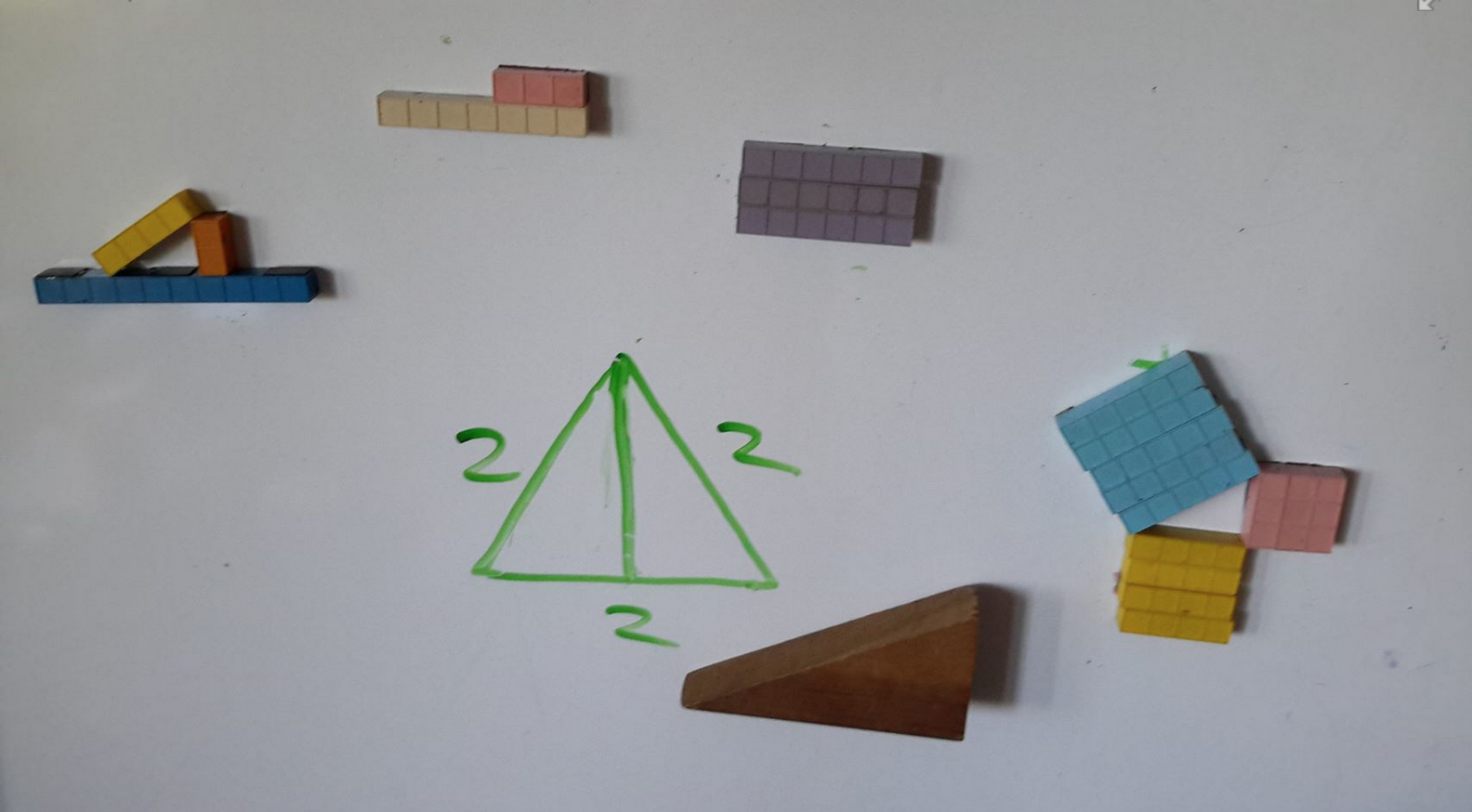
Here is a photo set
from the training...basically shots of the white board before I erased it and moved on. For an explanation of what you see here go to the page and watch the 40 minute screen cast...


Use these simple tools to make trig child's play.

Don't forget to check out the FREE lesson on this page:

How to teach trig to 8 year olds.

***Also be looking forward to a sale of sorts where you get a combo kit, a pass for two trainings AND, plus a lifetime password all for just 345.00. And because I will have the combo kits in hand you will get same day or one day PRIORITY shipping, so you will have the kit IN HAND in a week not 6 to 8 weeks. Stay tuned for that.

Another FREE Mirco LESSON:


You will see the reason for some of the vids on the password protected page once you see these little kids learning Trig...make math easy and do short lessons. Even this 15 minute lesson could be broken up. But I'm making videos to show you guys...note how I ask questions I don't just tell them facts to memorize. All this and more is covered in "How to teach trig to eight year olds." Note how I EXPECT hem to know and use basic concepts like square toot, divide a number by itself to get one, opposite addends, same and more...put it altogether with my help. 


Trig too much for you? Start with a FREE book on subtraction. Get Supremely Simple Subtraction here. If they can't do subtraction easily math isn't going to be any fun. Check the comments out on that page...people really like my free stuff I think you will find you'll get more than your money's worth when I ask you to pay for something. Get your FREE copy today.  Also go back up and hit like if you got some value out of this page whether to get "How To Teach Trig To Eight Year Olds" or not.


Saturday, June 20, 2015

Algebra With A 6 Year Old Girl.


Playing what's under the cup is a hugely powerful game. In the beginning it teaches simple addition...but as we progress it teaches much more. It is an extremely powerful game although it it deceptively simple. Great for pattern identification and basic algebra concepts that will be important throughout their math careers. The basic concepts are not beyond the grasp of any child so long as you introduce them at the child's level.

Here is a short vid showing the introduction of Hero Zero.


We could have gone either way...to NFGBT1 or to Hero Zero. I usually go to Hero Zero first.

Here is a longer video which is just one of many you will find behind the SAMPLE LESSONS password protected page. You get to watch it here for FREE. If you want to watch a lot more videos like this just get a password. The Trig page alone make the password worth it, and six bucks a month is a no brainer. Be reminded you are watching most of a lesson for which the people in paid $50.00.

This video shows sample lesson with a 6 year old girl doing problem solving it is also on the sample lessons page; problem solving like x + 5 = 13 is EASY.

But also x - 7 = 6 which takes a little more thinking.

And story problems like 20% of my little ponies are blue, I have 70 my little ponies how many are blue?

Introduces 21 is x% of 70 and more...for more on Percentages click on the percentages tab (%) at the house of math or click the link (t)here.


In the picture she shows us a problem she made and we got it right that a 5 was in the cup...my son earned 1 buck. I made 49.00. If you would like me to pimp my son out to you so your kid can play math and stay engaged email me...she usually will play for 20 minutes before she starts asking if we can quit. With my son I had to cut the lesson off after an hour...46 minutes of it is on video unedited..so there are long pauses as they figure out the answers...perfect for your kids to play along in real time...


Monday, May 5, 2014

Base Ten Block Compound Lesson.

 One of the best things about base ten blocks is they impart so much math so quickly if you know how to best use them. They make math concepts visually obvious. They take the overwhelm out of the equation. Even if the child does get all of it in the first exposure they don't turn off, they usually get curious and find out more. Base ten blocks aren't scary. 


Here is the student with his younger brother and mom playing around during a game of what's under the cup.

When I talk about collapsing time frames this is one of the reasons why. We can teach so much at once AND make it EASY to understand. They can SEE how it all goes together. When they see it here they will be used to seeing how it works so when they get other lesson they will be used to making those associations and connections on their own.  THE EXACT OPPOSITE of teaching it in fragmented lessons that stress memorizing just long enough to take the test. Segmented lessons that focus on rules and process, axiom and postulate DO NOT give the student an over all understanding of the mathematics and may in fact harm their grasp of how the language of math works..

Here is a feisty six year old who although you can't see him was having a fun time playing math with me over the internet. He was shocked when it was time to quit. Base ten blocks and compound lessons. Try a few with your kids. You won't confuse them by exposing them to math concepts early. This vid starts out a tad rough but give it a minute or two.


The video starts out with us building square numbers a really important concept to introduce to little kids. (Do a search, crewton ramone square numbers...see what comes back) This is often overlooked in public schools. And as you can see we cover some basic concepts with regard to squares, WHILE we learning to count and add and multiply.

At this point we have been playing for about half an hour...started out building tens and playing what's under the cup. Introduced some simple concepts like want to be a ten and count the big ones first...and then spent time playing with squares and then took a side trip into multiplication (15 x 15, 16 x 14 etc see vid for more, eventually we will get the 20x20 matrix memorized) where the addends for the tens added up to ten, so ten, tens made a second hundred which made the whole thing EASY.  This whole lesson is just teaching more counting while remembering bigger is funner.

Here is a blog post on just plain ol' multiplication.  And here is a video on why you WANT to do compound lessons so they get more understanding and not just memorization. I am doing teacher/parent training and this vid is a part of that:


“I don’t want to ruin your spring break…but I’m going to ruin your spring break.” ~Engineering professor while assigning homework

“If all else fails, you can always use the tried and true, ‘The answer is trivial and is left as an exercise to the reader.’” ~Calculus professor

“I made a mistake somewhere… In some sense you’re also responsible for my mistakes, if I make them and you don’t tell me then you’re my accomplices.” ~Mathematical physics professor

“I appreciate that some of you might not be able to see this, but you should be able to work it out anyway.” ~Partial differential equations professor

Saturday, April 19, 2014

Patterning With Base Ten Blocks And 11's.


Here is a lesson where we basically play spot the pattern. We start off with base ten blocks and very quickly move to symbols only; however, this lesson does answer a lot of questions with regard to WHY some of the "tricks" with 11's you may have learned work the way they do.

This why we like math, the patterns are easy to see, the rules are consistent, you can prove your answers...but don't get caught up in the rules and theorems. Play and put the children in a place where they can discover the rules for themselves. Once they see the patterns they can often make up their own rules and then test them to see if they always work...if you do it right they will tell you the Pythagorean theorem you don't have to tell them. This is just more of that.


This is a simple lesson just playing with 11's. You could play with 9's (← note those are 1st graders in a classroom) or other numbers just for the fun of it. If the child is curious and having fun the lesson is much easier. We went pretty long considering it was just on 11's but they were fairly well engaged for more than a half hour.

In this lesson they got to practice their addends again, and do some addition and use their counting skills creatively and learn a little about patterns. More fun to be had at Crewton Ramone's House Of Math.

Join me on Facebook.


Friday, April 18, 2014

Manipulatives For Two Digit Times One Digit Multiplication.


At Crewton Ramone's House of Math we don't just get multiplication through 9x9 down, we go all the way out to 20X20. Notice I say "get it down" not just memorize. Manipulatives make multiplication easy, so easy, ans so fast that it will look like they have it memorized even if they have to do a little calculation in their heads...with enough practice they will memorize their multiplication facts but instead of it being difficult and hard we make it fun and easy. In this lesson they learn and practice several things at once.


If you watch the video below you can see why I spend so much time on addends. Addends are important. This lets them practice their addends WHILE they do multiplication like the big kids. No worksheets. No symbols to start with, just play with blocks and have fun, let them build the problems. Don't tell the youngest kid but I was teasing him a little bit by telling him this stuff was "too hard" for him. SO of course he wants to show everybody he can do it too...and he does. (Proper motivation works wonders. You need to be smarter than your six year old.) Any little kid can do math especially if they speak English. On this blog and on my website I try to show you their best use.

The seven year old kept confusing multiplication with addition and wasn't always sure which numbers to add when he was just looking at the symbols. He was also over thinking it and getting ahead of me because he knew there were more than just 3 tens in (17)(3) = 51 and that there were 5 tens not just 3. But I was asking him to count the blue ten bars not the ones "hiding" in there with the sevens. Note how the younger boy wasn't even thinking about the tens hiding with the sevens he just saw the 3 tens, and the oldest boy knew what I meant. He understood I was going thru the problem in parts.

If you listen you can hear the development differences between the three boys. They also get different problems for their skill level but the basic concept is the same throughout. Don't lose track of the idea that the concept remains the same the numbers just change. I use smaller numbers that require less counting for the younger boys and bigger problems for the older boy, but very soon they all can do any problem...they just need more practice with single digit multiplication but it doesn't stop them from doing this in fact this teaches them that. I also want to point out we are practice skill sets not drilling. There is a difference.

We also talked about multiplication being addition...you just do it over and over again.

They get to practice and learn their multiplication AND addends, I try to make this blatantly obvious during the video. Again: one teaches the other and visa-versa: you don't have to have all your addends memorized before you can do this this will help you leran them, neither do you need to have all your single digit multiplication facts memorized before you can do this, this will help you learn those too...especially when you are playing with the blocks. It also just makes it natural to see you are adding the tens plus whatever the units are. Basically just adding two rectangles, in the case of (17)(3) = 51 you are adding 30 plus 21 they can SEE it.


Also note that even though you can't see them it sounds like they are having fun, because they are. Laughter should be a part of math, it's fun when you get it right, it feels good. I see so many math classes where they are forced to do worksheets in silence. Or where they are expected to learn in SILENCE. Why not make math fun?


Notice that pretty soon we are just using symbols, no blocks but after the lesson on vid we went back to using blocks, this was just a demonstration for YOU the viewer.

 We've gotten so poor at teaching math public schools can barely get them to memorize the 9x9 matrix, that's only 81 facts, we are on our way to memorizing 20X20, that's 400 facts.  Addends are not just "kinda important", they are crucial.  Same with multiplication. Addends make multiplication easy and multiplication makes ALL the math easy because it allows you to count quickly, see patterns, find common factors and more. I can't stress enough how important it is.


There are those who say we don't need to learn our multiplication tables because calculators are so ubiquitous...the problem with that is kids hit 7x6 when they mean 7x9 because the six is right under the nine and it's easy to miss or "fat finger it" and they don't even notice. There's a big difference between 42 and 63, but they don't have the number sense to catch the mistake.

All of that can be avoided and it doesn't take hard work, tons of work sheets, or drudgery. Multiplication tables have their place but early introduction and playing are much more fun and effective than handing them a multiplication table and saying here memorize this.  If you only click one link on this page click that one.  And of course once you are done playing with multiplication it's time to to play with division.  Then again it should be hard to do one without the other...

Can you think of the reason we count the tens first other than that it makes it easier?

Find me on Facebook.

Go to Raymond's Password Protected Page.


"You save an old man and you save a unit; but save a boy, and you save a multiplication table."  

"Time neither subtracts nor divides, but adds at such a pace it seems like multiplication."